
By: Mahmoud Gamal
Dubai – Mubasher: Traders in the UAE stock markets have been recently wondering about the absence of liquidity and the impact of selling pressures, as well as the lowest levels that the two Emirati bourses hit since almost more than two years.
Liquidity is likely to be driven by new initial public offerings (IPOs), consecutive capital increase, keeping cash through deposits, and tendency to the US stock market and digital currencies which are currently achieving unstoppable gains, analysts told Mubasher.
Capital increase
One of the main factors of thin liquidity in the UAE bourses is firms’ announcement of capital increases, mainly the banks sector’s firms, market analyst Ziad Al-Qamizi told Mubasher.
Dubai Islamic Bank (DIB) announced late February that its general meeting has approved a 33.3% capital increase to 6,590 million shares from 4,942 million, Al-Qamizi highlighted.
Moreover, Emirates NBD has recently announced that its general meeting proposed a 32% capital hike to AED 7,350 million from AED 5,558 million, he added.

Al-Qamizi noted that the upcoming IPOs this year are not the main reason for the lack of liquidity in the UAE stock markets.
UAE economy
“We have to realise the real volume of the UAE economy, which is still growing with balanced pace, and the gross domestic product (GDP), which may surpass AED 1,600 billion for 2017,” Al-Qamizi continued.
“On the other hand, the current market capitalisation of local stock markets did not exceed AED 880 billion, which is lower than 55% of the country’s GDP and considered low according to accredited global standards,” he added.
Secondary offerings
Investors are recently inclining to secondary offerings of shares in firms, including DIB, Emirates NBD, Gulf Navigation Holding, and Drake and Scull International (DSI), senior financial analyst at Menacorp Financial Services Issam Kassabieh said.
Firms’ performance and goal of secondary offerings, as well as its operational plans, are encouraging investors to boost capital, Kassabieh noted.
Investors prefer to trade on stocks ahead of Islam's holy month of Ramadan, he indicated, pointing out that the investment portfolios are getting ready to participate in the upcoming international IPO of Saudi Aramco.
The anticipated local IPOs, mainly Emirates Global Aluminium’s (EGA) IPO which is a historic step in the Emirati financial market as the industrial sector, particularly iron and aluminium industry, is an integrated part of the UAE’s GDP after oil and gas, he said.
He also referred to Emirates District Cooling’s (Emicool) upcoming IPO, which is expected to be launched within the coming months this year after Dubai Investment held a 100% stake in it recently.

External factors
Kassabieh further noted that the unstoppable gains of the global stock markets, mainly the US, have lured many investors from the GCC countries over the past period.
Accordingly, GCC stock markets have seen selling pressures, he pointed out.
Digital currencies
Traders have been shifting away from the UAE bourses to the global stock markets, Forex trading, and digital currencies, which have remarkably impacted liquidity in the local markets since the beginning of 2018, capital market analyst Basel Abu Teima told Mubasher.
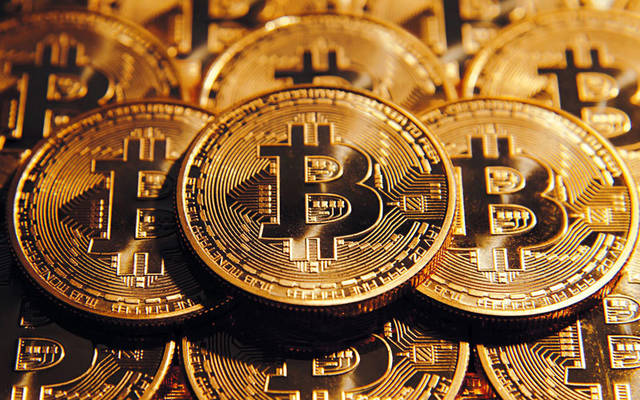
Liquidity ratios fell as traders have lost confidence in the local stock markets, which have been directed lately by rumours and false news, Abu Teima explained.
The absence of a market maker, in addition to applying sell-off at an unreasonable time, are among the reasons for the UAE bourses’ recession, he indicated.
The banks’ portfolios are also turning towards other investment alternatives, such as buying sukuk and keeping cash as deposits, hence, abstaining from buying stocks, he remarked.
The disappointing financial results and cash dividends of some companies have supported the current recessed scene, he said.
The analysts emphasised that the local bourses would not face any changes as long as liquidity has not exceeded at least AED 600 million.
Translated by: Mai Ezz El-Din