
Mubasher: Russia has succeeded in rebounding from a two-year recession, which came on the back of a sharp drop in oil prices along with political sanctions, with inflation reaching its lowest level for the post-Soviet period and undershooting the Central Bank of Russia’s (CBR) target.
Meanwhile, the Russian ruble has appreciated allowing consumers and companies to benefit from easier credit, according to a new report by the International Monetary Fund (IMF).
Speaking at the IMF’s 2017 Annual Meetings, first deputy governor for the CBR Ksenia Yudaeva highlighted that the bank introduced Basel III regulations and improved supervision, both of which would benefit the country’s medium- and long-term growth.

Growth prospects for the Russian economy are seen at 1.5%, according to the IMF, which cites limited private investment in non-oil and gas sectors.
“We would like to see a financial sector with healthy banks only. It will lead to increased competition, which will, in turn, make financial resources more available for the real sector,” Yudaeva stressed.
She added that the CBR is adopting a similar approach for the rest of the financial sector, which includes pension funds and insurance companies, whose sustainability the bank is looking to improve.
“The goal is to make them more solid and capable of providing long-term resources for companies and people,” the top CBR official added.
Commenting on the stability of the Russian system following the CBR’s bailing out of two large banks, Yudaeva said that “overall, the system is stable.”
She added that Russia has suffered a “turbulent period” in previous two years, witnessing a rise in bad loans while profits and credit growth tumbled. However, this is no longer the case and the Russian “economy and the banking sector are getting healthier.”
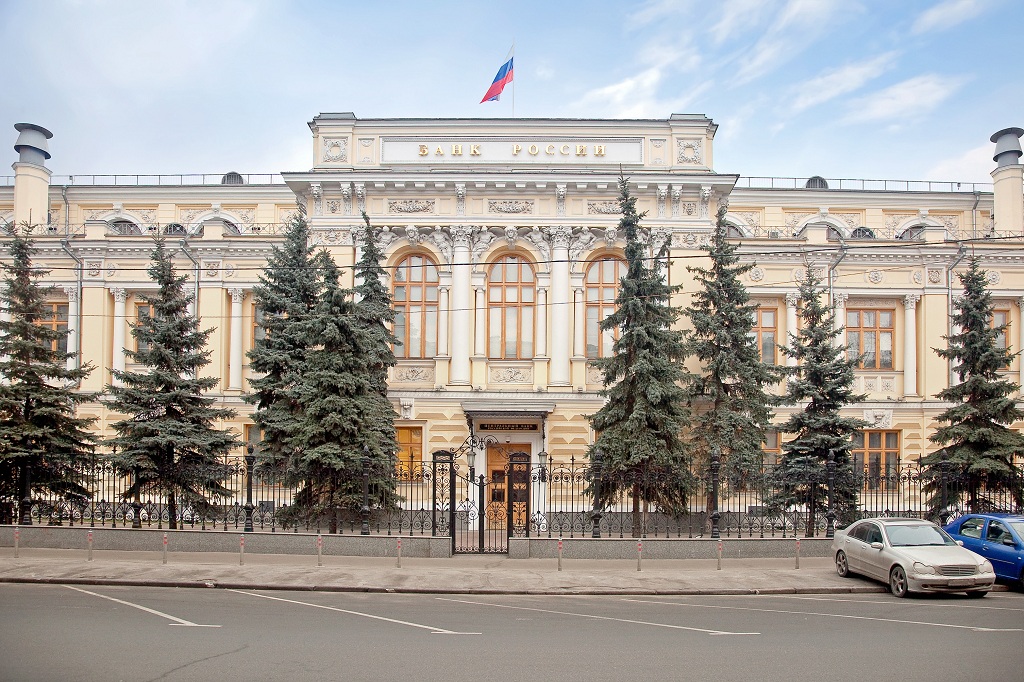
“To address the problem of nonperforming loans, we liquidate or rehabilitate so-called “zombie” banks, which are highly indebted and incur persistent losses,” the top official told the IMF. Zombie banks do not finance growth, but increase stagnation, she added.
Over the past four years, the CBR has removed around 350 banks from the market.
“Unfortunately, it is still very common in Russia that private bank owners use their bank to finance their businesses. They think this is a safe strategy, but at the end of the day it is a very risky one,” she added on the same line, noting that the CBR also deals with banks with bad business strategies, whose books may be correct on the surface, but “deep down they are insolvent.”
Institutions involved in money laundering are also being shut down by the CBR, the top official stressed.
As for the CBR’s key interest rate, currently at 3%, its lowest level since 2014, with inflation falling below the bank’s target, Yudaeva explained that the reasons for inflation undershooting the CBR’s target are “one-off factors”, which include real exchange rate appreciation and falling food prices due to large crops.
“Inflation expectations are still high, so we are decreasing interest rates slowly,” the CBR executive highlighted.
Higher interest rates have not significantly had a negative impact on growth. “It looks like a confidence effect is at play: macroeconomic stability has helped revive growth, and compensated for whatever negative effect a tight policy could have had,” Yudaeva expounded.
The CBR now expects the output gap to close with the economy coming closer to equilibrium.
“We do not expect growth to speed up significantly when interest rates go down. It may even stabilise at a somewhat lower level,” the top official adding, citing the bank’s structural reforms including improvements in the investment climate and infrastructure.