
Dubai – Decypha: The Telecommunication sector is one of the fastest growing sectors in United Arab of Emirates (UAE) and the most developed in the entire MENA region. It has the highest penetration levels in the whole region, with a well-developed telecom sector and high levels of mobile, telephone, and broadband penetration.
One of the strengths of the industry is its technologically advanced telecommunications infrastructure. The local population is also highly focused, tech-savvy and global in both composition and outlook.
The UAE has maintained its 12th global ranking in the Information and Communications Technology (ICT) index, one of the key indicators included in the 2016 Global Innovation Index (GII) that was revealed on 2016. The country topped the Arab nations and is placed 41st worldwide in overall performance.
The UAE has also been ranked 1st in the Arab World in the Network Readiness Index and it was shifted from 40th place to 38th in the Generic Top Level Domains category and for rose five places from 50th to 45th in the Country Code category, two other indicators measured under the GII.
Market Overview
The country has over 2.7 million fixed line subscriptions, up by 28.5% in one year. The emirates also hosts over 17.9 million mobile subscriptions, up by 6.4% in comparison to 2015 figures, and one million internet subscriptions, according to the Telecommunications Regulatory Authority (TRA) of the UAE.
The number of active mobile subscriptions is growing fast, as it reached over 16.8 million by 2016 with a penetration rate of 209.8%, based on figures in the Seventh Annual Sector Review of the TRA. It is worth noting that this percentage represents one of the highest mobile penetration rates in the world.
The revenues from the telecommunications sector in the UAE has recorded AED 2.7 billion for the fixed landlines, AED 23.3 billion for mobile services, and AED 5.9 for internet services in the country.
The TRA has shown statistics for the first quarter of 2016 on the nation’s most popular mobile phone handsets, social networking platforms and applications websites. Its report explains the market share of mobile phones in the UAE by manufacturer and model.
According to the report, during the period between 1 Jan 2016 and 30 March 2016, 68.9% of the handsets that were registered on the UAE’s networks were Smartphones. The iPhone 6 continues to be the most popular Smartphone in the UAE sharing by 4.48% of the total handsets that were registered on UAE networks. The report clarifies that the iPhone 5s was the second most popular Smartphone that comprising 2.39%. Samsung J100H/J1 was ranked the third most commonly used Smartphone and its share was 1.81%, followed by the iPhone 6s comprising 1.69%. However, the report confirms that Nokia 108 is the second most used phone among all handsets with 2.92%.
During the period from 1 Jan 2016 to 30 March 2016, users of Smartphones and fixed Internet services in the UAE visited many websites and applications. Apple iTunes was the most commonly visited applications website, followed by Samsung Apps, and finally Android Applications, the report noted.
Figures that explained the improvements in the telecoms sector and the country’s performance in international telecoms rankings, the TRA report included.

Main Players
The UAE has two important network and mobile operators which are the original imperative Etisalat and operator Emirates Integrated Telecommunications Company, commercially rebranded as (du), it launched its services in February 2007.
Due to competition reasons, Etisalat has reduced its charges a little bit. However, both operators filed to implement sharing network which led to restricting both of them geographically. As a result, du has monopolized the Dubai’s free trade zones whereas Etisalat had a monopoly elsewhere.
Etisalat is considered to be one of the most profitable telecom organizations in the region. And it is a huge contributor to UAE’s economic development after petroleum. In addition, it is one of the largest companies in the Middle East as it operates in several other African and Asian countries.
On the other hand, du is showing a great intention in developing 5G technology. The UAE has finally a stable network sharing agreement in place. Etisalat attributes nearly 30% of its mobile services revenue to its growing mobile data stream. A very popular way to attract and retain customer is the service bundling.
Despite the fact that Etisalat and du are the main players in the sector, the Telecommunications Regulatory Authority (TRA) has recently issued licenses to some more niche outfits. One of which is ,Al Yah Satellite Communications that offers satellite phone systems via Al Yah Satellite (YahSat) and Al Yah Satellite Advanced. Additionally, Thuraya and Media Zone Intaj FZ have licenses to offer satellite services in the UAE.
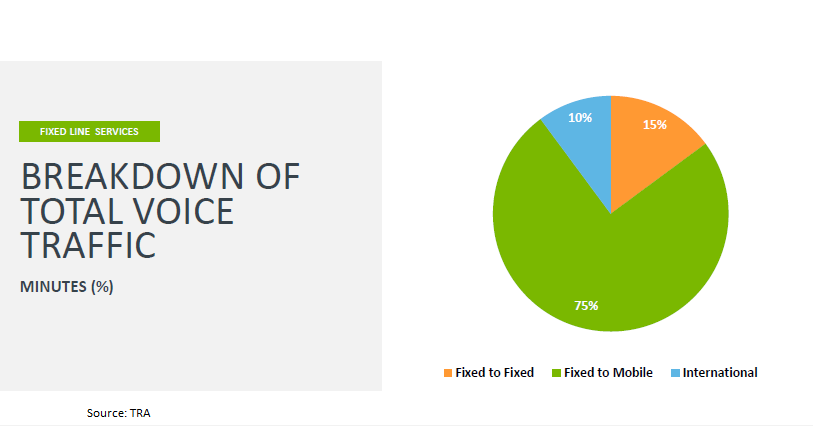
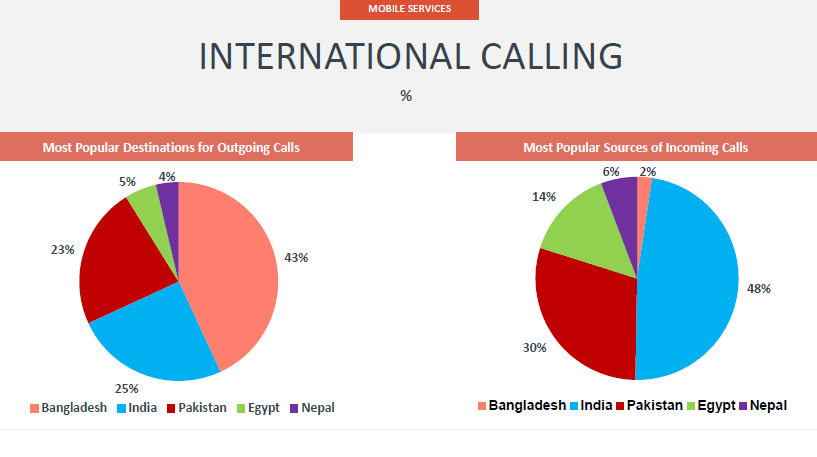
TRA data also clarified the activity in line with global trends for service usage among telecoms customers. The number of SMS and MMS messages sent in 2013 reduced by 13% and 23%, respectively whereas the international call minutes continued to be shifted from fixed to mobile. This contributed to most of the annual increase in mobile voice minutes that has increased from 23.5 billion in 2012 to 26.18 billion in 2013. International fixed-line voice services have decreased by 12% in the same period whereas those on the mobile have increased by 36.7%.
Future Trends
In UAE Telecom Sector Mobile, mobile data and Broadband services are expected to be the pioneers of the growth of Telecom industry in UAE.
The entry of the Mobile Virtual Network Operators (MVNOs) might be a strong competitor in the UAE Telecom market.
The MVNO is a wireless communications services provider that does not own the wireless network infrastructure over which the MVNO provides services to its customers. An MVNO enters into a business agreement with a mobile network operator to provide a huge access to network services at wholesale rates, and then sets retail prices independently.
The MVNO concept whereas the company that provides the mobile services does not have its own license nor does it should have the entire infrastructure, is strong common concept worldwide
The idea of MVNO is becoming common in UAE. That would trigger competition by allowing a new provider to offer services while using the existing networks of Etisalat or Du.
FRiENDi GROUP, a regional MVNO based in Dubai, has announced before a "double-digit USD millions" equity investment by Oman-based Dolphin International and a global venture capital firm, ePlanet Ventures.
Challenges to growth
There will be a higher competition in the telecoms sector impacting the earnings growth of the UAE’s two operators.
Du is expected to get more benefits than Etisalat, as its infrastructure is limited to new developments in Dubai.
Du is a simple and strong company; it is additionally expected to make higher revenues resulting from its higher number of subscribers and its stronger mobile data revenue, Karim Riad, a telecom analyst at Cairo-based Beltone told the National Business.
As for Etisalat, the absorption of the local market would probably enhance the continued focus on the development of international operations, with its Maroc Telecom deal and the consolidation in Africa are more likely launch new areas for growth.
On the other hand, for many domestic customers in Dubai, several changes would probably take place in the short term.
For instance, du offers unlimited downloading of music service Anghami whereas some Etisalat plans do not count certain social media applications. These arrangements could be making it tougher for competitors to those services to gain traction with customers.
The whole environment of the market’s competitive is likely to be steady which reflects health for both of the telecoms companies’ bottom lines.
The telecommunications market in the UAE will grow at a compound annual growth rate (CAGR) of 3.7% over 2016-2021, resulted from the growth in the fixed and mobile data segments, according to the latest industry research report on: UAE: Operator Investments in Fiber, 4G and 5G Technologies Market.
Mobile data and fixed broadband revenue will increase, resulting from the increasing adoption of 4G networks and fiber-optic technology. Fixed VoIP will be the fastest-growing segment aided by the growing adoption of triple-play services, the report said.
By Nourhan El Sebahy